
The post-Covid pandemic boom in corporate revenues appeared to have faded away in 2023-24. Yet, companies have reported a sharp recovery in their profits in FY24, driven by high margins. Their combined net sales, including gross interest income for lenders, rose by a modest 4.8 per cent year-on-year (Y-o-Y) in FY24.

The stock of United Spirits, the country's largest liquor company by market capitalisation (mcap), has gained 11 per cent over the past week on double-digit growth guidance, rising premiumisation trend, operationally in-line performance in the March (Q4FY24) quarter and a rally in consumer stocks. The revenue growth of the company came in at 7 per cent year-on-year (Y-o-Y) mirroring the growth of the prestige and above (P&A) segment. This segment comprising premium brands accounts for 88 per cent of the revenues.

There could be near-term margin pressures for lifestyle accessories major Titan Company. Even as the company maintains its growth outlook over the medium term, it has revised its margin guidance for the jewellery segment downwards. The company has adjusted its medium-term margin guidance to 12 per cent from the previous range of 12-13 per cent.

Auto parts maker Sona BLW Precision Forgings (Sona) reported strong revenue in the fourth quarter of financial year 2023-24 (Q4FY24) as demand for electric vehicles expands. The company reported a 19 per cent year-on-year (Y-o-Y) increase in sales to beat street estimates. Sales were powered by a 34 per cent growth in the battery electric vehicle (BEV) segment and a good show in the differential gear segment.

Kansai Nerolac Paints has seen its market capitalisation (mcap) erode by over 5 per cent since May 3 after posting a subpar performance in the fourth quarter of 2023-24. Weighed down by stiff competition, the company has shed Rs 1,172 crore over the past two weeks in mcap. India's largest paint maker in terms of mcap, expects double-digit growth in the industrial segment and aims to maintain margins, but its performance in decorative paints could suffer amid competition.
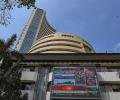
According to data from BSE, the 4,357 companies available for trade had a combined mcap of around Rs 416 trillion on Tuesday against India's GDP at current prices of Rs 296.6 trillion in FY24.

Tata Motors reported a consolidated net profit of Rs 17,483 crore (adjusted for exceptional gains and losses) for Q4FY24, surpassing TCS' consolidated net earnings of Rs 12,434 crore. For the automotive major, this marked a 213.7 per cent year-on-year increase in the bottom line, from Rs 5,573.8 crore a year ago. In contrast, India's biggest IT firm saw a more modest Y-o-Y growth of 9.1 per cent in net profit, from Rs 11,392 crore.
India Inc reported an uptick in revenue growth in the January-March quarter (Q4) of 2023-24 (FY24), but it came at the cost of a deceleration in earnings growth.

Notwithstanding robust volume growth and a strong performance from Jaguar Land Rover (JLR), Tata Motors, the country's second-largest automobile (auto) manufacturer by market capitalisation, disappointed the Street with its January-March quarter (Q4) results for 2023-24 (FY24). While consolidated revenues saw a 13 per cent increase, lower-than-expected realisations in the Indian operations weighed down overall performance.

Big, listed FMCG (fast-moving consumer goods) companies such as Hindustan Unilever, ITC, Nestl, and Britannia have been top-performing stocks on the bourses in recent weeks. The Nifty FMCG index, which tracks the share prices of the country's top 15 listed FMCG companies, is up 1.9 per cent month-to-date in May compared to a 2.4 per cent decline in the benchmark Nifty 50 in the period.

The stock of Mahindra & Mahindra (M&M) has been touching successive all-time highs on the bourses and, over the past year, gained 81 per cent. While the S&P BSE Auto Index has not performed poorly, registering gains of 73 per cent, it still trails the company by 800 basis points (bps) during this period. There are multiple reasons why investors are beating a path to M&M's counter.


The stock of Apollo Hospitals Enterprise (AHEL), India's largest listed health care services company, fell 4.6 per cent on Monday (April 29) and slipped another 0.34 per cent to close at Rs 5,946.20 on Tuesday (April 30). The share declined due to a lower valuation for subsidiary Apollo HealthCo (AHL) and an aggressive valuation for Keimed, a promoter-owned drug wholesaler that is merging with AHL.

The revenue growth of early birds or companies that have declared their Q4FY24 (March quarter) numbers is the highest in the last four quarters. The 178 companies (excluding their listed subsidiaries) that declared their results have reported a sales growth rate of 13.2 per cent year-on-year (Y-o-Y), taking aggregate revenue to Rs 9.1 trillion. Including other income, growth is at 16 per cent, the highest in the last four quarters.

The financial numbers for 2023-24 (FY24) of the four pure-play listed asset management companies (AMCs) have enthused the Street. All firms listed robust growth in net profit and revenue both during the January-March quarter (Q4) of FY24, as well as in full FY24. The strong performance comes amid a positive growth environment for the sector, led by tailwinds such as sharp growth in assets under management (AUM) and robust performance in equity offerings.

A cocktail of heatwave and upcoming cricketing events is expected to usher in the peak season for the country's largest beer maker, United Breweries. The beer maker, which has gained share in some key markets, will be a major beneficiary as April to July is an important period contributing to 40-45 per cent of its annual beer volumes. Going ahead, the T20 Cricket World Cup in June and the ongoing IPL will have a positive impact on volumes and should be able to offset the negative impact of elections on sales, experts believe.

https://www.rediff.com/business/report/quality-control-orders-what-does-this-mean-for-domestic-industry/20240425.htm

As the Indian equity markets scale a new high, the gap between stock prices and the underlying corporate earnings has widened to its highest level in more than 30 years. At its current level, the benchmark BSE Sensex has run up nearly 31 per cent more than the growth in its underlying earnings per share (EPS) in the past 20 years. Most of the divergence between share prices and underlying earnings growth occurred in the past 10 years.

Corporate margins and profits in India remain vulnerable to changes in crude oil prices in the international market. Historical quarterly data from listed companies (excluding banks, finance and insurance, oil and gas, and power sectors) indicate an adverse correlation between corporate margins and crude oil prices.

This is a good opportunity for long-term investors to pick quality small and midcap stocks at reasonable valuations.
 © 2025 Rediff.com - Investor Information - Advertise with us - Disclaimer - Privacy Policy - Sitemap - Feedback - About us - Terms of use - Grievances